
The 4th Nandu River Smart Medical and Rehabilitation Industry Summit Forum
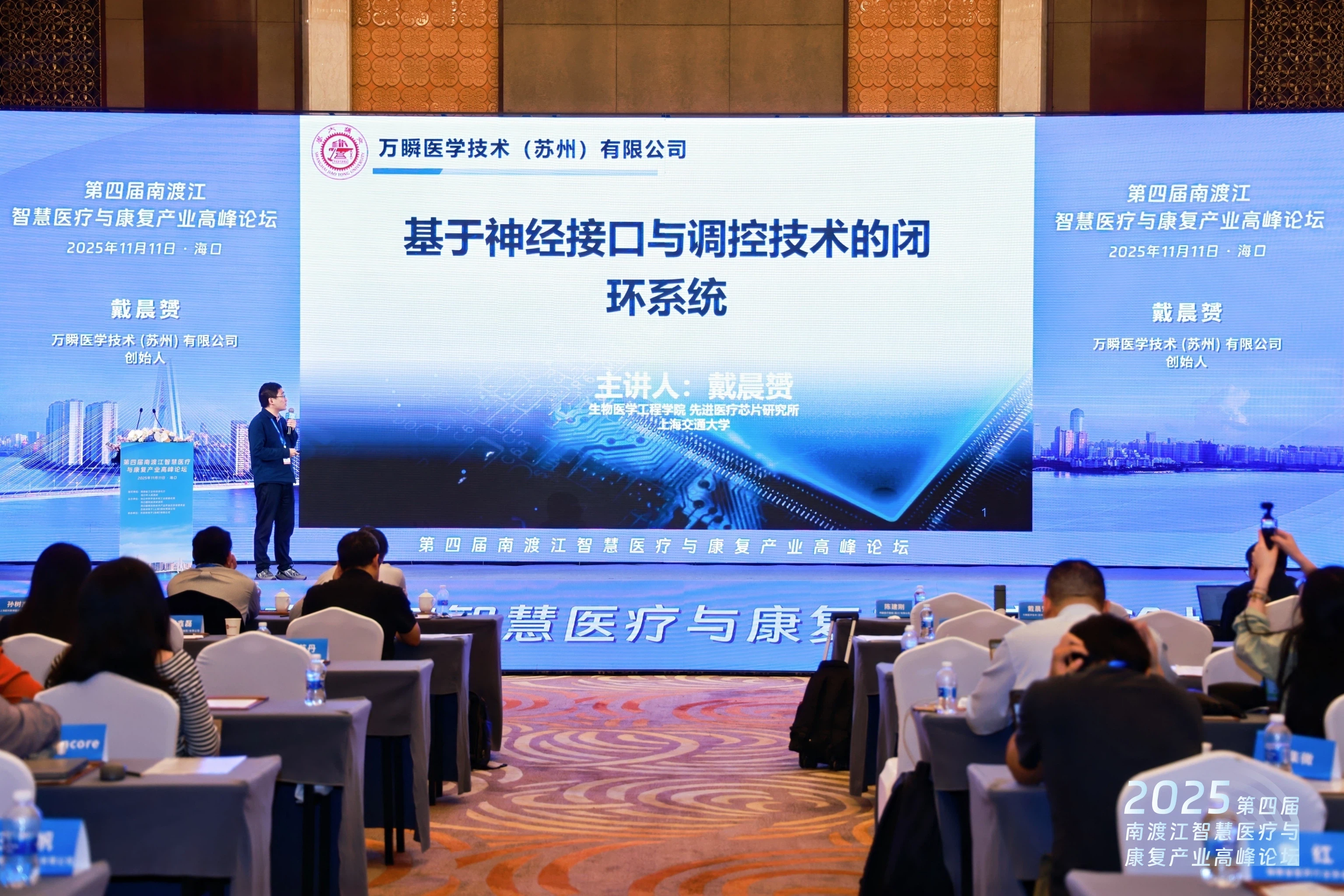
On November 11, Prof. Dai Chenyun, founder of Qianyu & Onesense and Associate Professor at Shanghai Jiao Tong University, delivered an in-depth presentation at the 4th Nandu River Summit on Smart Healthcare and Rehabilitation Industry, sharing the team’s latest research achievements and industrialization progress in medical devices and closed-loop neuromodulation systems. Since 2022, the Nandu River Summit has been held annually in Haikou, aiming to promote the integration of the integrated circuit industry with the broader healthcare sector, and to ensure that chip technology truly serves people’s health needs.
The summit has not only attracted extensive media attention and stimulated in-depth industry discussions, but also enabled participants to gain direct insights into the latest industry trends, creating favorable conditions for collaborative exchanges among enterprises and establishing a stable mechanism for industrial communication and technology transfer.
During his speech, Prof. Dai introduced the closed-loop neural interface system, a technology that offers new pathways for rehabilitation and disease intervention. Its core concept lies in the cyclic feedback between signal decoding and reverse modulation.
The system collects neural signals through wearable devices or implantable electrodes, deciphers the patient’s intended movements, and drives external terminal devices, forming a complete “nerve → periphery → nerve” loop. This helps patients regain motor functions or suppress symptoms, restoring their ability to carry out daily activities.
To address the diverse needs of different patients and treatment scenarios, the Qianyu & Onesense team has developed three tailored products, providing flexible therapeutic strategies.
For patients with essential tremor and Tourette’s syndrome:
A highly integrated wristwatch device was designed to detect hand EMG signals using dry electrodes and provide closed-loop suppression of tremors through vibration stimulation. In trials, patients experienced significant improvement in hand tremors after 30–40 minutes of wearing the watch, with fine motor functions such as handwriting and smartphone operation restored.
For patients with hemiplegia:
In collaborative research with a renowned Grade A tertiary hospital in Shanghai, the team decoded motor intent and stimulated spinal nerve roots to restore lower-limb movement in hemiplegic patients. Studies showed that both animal models and initial clinical subjects achieved phased recovery of gait movements after training, offering a novel closed-loop treatment approach for hemiplegia rehabilitation.
For patients requiring high‑precision or non-invasive treatment:
A high‑precision EMG acquisition platform replicates and transmits motor intent through peripheral signals, combined with neuromuscular stimulation to facilitate rehabilitation training.
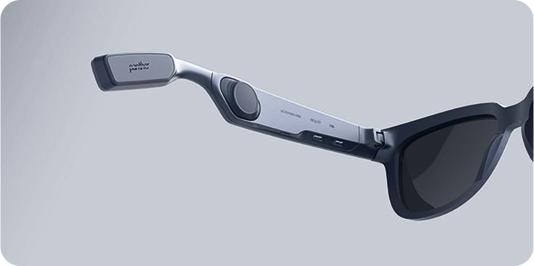
In addition, Prof. Dai proposed a new direction for the extension of brain-computer interface (BCI) technology into consumer‑grade products: sleep monitoring and intervention. Using thin-film electrodes to detect ECG, respiration, body movement, and sleeping posture, the system enables all‑day, non-invasive sleep monitoring while providing cardiac health risk assessment. By integrating sleep respiratory monitoring with neuromodulation technology, the platform can improve sleep apnea and insomnia through stimulation, enhancing overall sleep quality and forming a closed-loop system from monitoring to intervention.
The Qianyu & Onesense team is actively promoting the rapid industrialization of intelligent neural interface technology, covering rehabilitation, movement disorder intervention, sleep health, and other fields. This signals the broad application prospects of closed-loop neural interface systems in medical rehabilitation and health management.
The bidirectional closed loop of decoding and modulation not only brings new rehabilitation opportunities to patients with hemiplegia and movement disorders, but also provides a technological blueprint for sleep health and consumer‑grade medical devices. In the future, with advances in algorithm optimization, wearable device upgrades, and clinical validation, such closed-loop neural interface systems,are expected to gradually move from the laboratory to widespread clinical and daily use, becoming an important component of intelligent healthcare.